Italian Last Names and the Calendar
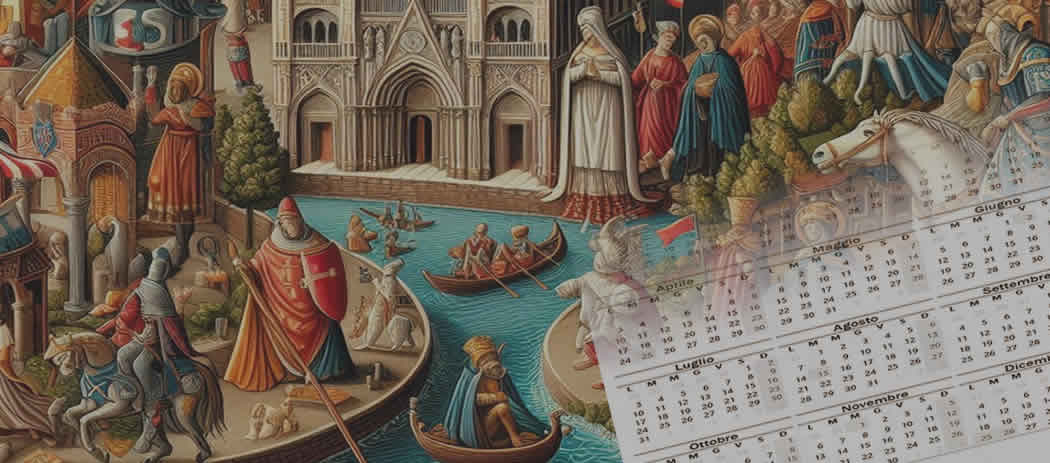
Both hours and days of the week, as well as months, are reflected in many Italian last names, linking them in various ways to the calendar. These names may commemorate religious holidays like Ognissanti (All Saints) or Ferragosto, indicate specific times of the day such as Mattino (Morning) or Sera (Evening/Night), represent the timing of a meal, or even a season. These last names vary widely and are found throughout Italy, often connected to regional history.
In many cases, these last names were assigned to abandoned children near churches, palaces, or residences. It was the religious institutions or, later, with the establishment of the civil registry, the civil officer who chose these last names. Often, the latter took the opportunity to create especially unique names related to the calendar or the specific circumstances of the child’s discovery.
Days of the Week
Sabato (Saturday) and Domenica (Sunday) and their derivatives are the most common last names linked with the days of the week. These are joined by numerals: practically one for each day of the month. Let us see the list (each last name contains a link to the surname distribution map in Italy):
Cinque (Five) – Diciannove (Nineteen) – Diciotto (Eighteen) – Dieci (Ten) – Dodici (Twelve) – Domenica (Sunday) – Due (Two) – Giovedì (Thursday) – Lunedì (Monday) – Martedì (Tuesday) – Mercoledì (Wednesday) – Nove (Nine) – Otto (Eight) – Quattordici (Fourteen) – Quattro (Four) – Quindici (Fifteen) – Sabato (Saturday) – Sedici (Sixteen) – Sei (Six) – Sette (Seven) – Tre (Three) – Tredici (Thirteen) – Trenta (Thirty) – Trentuno (Thirty-one) – Uno (One) – Venerdì (Friday) – Venti (Twenty) – Venticinque (Twenty-five) – Ventisette (Twenty-seven) – Ventotto (Twenty-eight)
Months and Seasons of the Year
From Gennaio (January) to Dicembre (December), each of the months of the year, along with the seasons, are represented in the vast array of Italian surnames.
What is the origin of the names of the 12 months of the year? Meaning and provenance month by month
The word “month” has its root in Latin mensis, closely related to the Greek mēn, which translates as “lunar month” or “Moon.” This term was the first indicator of time division for the ancients. Historically, the structuring of time into seasons, months, weeks, and days is ancient, and the Gregorian calendar, also known as the solar calendar, currently prevails worldwide. This calendar, which organizes the year into twelve months, was established by Pope Gregory XIII in 1582, replacing the Julian calendar introduced by Caesar in 46 B.C., and is based on the seasonal cycle.
In ancient Rome, each month was dedicated to a specific deity. However, the original Roman calendar, known as the Calendar of Romulus, only had 10 months. Gennaio (January) and Febbraio (February) were later additions, probably by Numa Pompilius, the second king of Rome, since the year previously began in March. Hence, the months from Settembre (September) to Dicembre (December) are named as such, as they originally corresponded to the seventh, eighth, ninth, and tenth months of the year.
Agosto (August) – Anno (Year) – Aprile (April) – Autunno (Autumn) – Dell’Anno (Of the Year) – Dicembre (Dec ember) – Estate (Summer) – Febbraio (February) – Gennaio (January) – Giugno (June) – Inverno (Winter) – Luglio (July) – Maggio (May) – Marzo (March) –Mesi (Months) – Novembre (November) – Ottobre (October) – Primavera (Spring) – Settembre (September) – Stagioni (Seasons)
Moments
Alba (Dawn), Mezzogiorno (Noon), Tramonto (Dusk), as well as Ore (Hours), Minuti (Minutes), and Secondi (Seconds), are examples of surnames that mark each hour of our day. But, what is the most popular moment? Let’s review the list (as in the previous case, each surname contains a link to the map of surname distribution in Italy):
Alba (Dawn) – Merenda (Snack) – Minuti (Minutes) – Mezzanotte (Midnight) – Cena (Dinner) – Giorno (Day) –Secondi (Seconds) – Sera (Evening) – Notte (Night) – Pranzo (Lunch) – Palestra (Gym) – Gioco (Game) – Riposo (Rest) – Lavoro (Work) – Tramonto (Sunset) – Pasto (Meal) – Ore (Hours) – Decimi (Tenths) – Mattino (Morning) – Pomeridiano (Afternoon) – Meridiano (Midday) – Saltamerenda (Skip Snack) – Pausa (Break) – Mezzogiorno (Noon) –
Scuola (School) – Mezzodì (Midday) – Crepuscolo (Twilight) – Letto (Bed) – Sveglia (Wake-up)
Festivities
Many Italian surnames derive from festivities that are deeply celebrated in Italy, reflecting the rich religious and cultural tradition of the country. These surnames, like Capodanno (New Year), Pasqua (Easter), and Natale (Christmas), among others, not only signal the most significant days of the Italian calendar but also underline the importance of religiosity in the history and identity of the Italian people. From days marking fundamental religious events, such as Ascensione (Ascension) and Pentecoste (Pentecost), to popular festivities like Carnevale (Carnival) and Ferragosto, these surnames perpetuate the heritage of a country where faith and celebration are intertwined in the social fabric across generations.
Ferragosto deserves a special mention, as it is one of the most anticipated Italian holidays, celebrated on August 15, originating from the Feriae Augusti, a series of festivities established by Emperor Augustus in 18 BC. Originally, this rest day was introduced after intense periods of agricultural work, allowing workers a period of rest and recreation. Over time, Ferragosto merged with the Catholic feast of the Assumption of Mary, adding a religious significance to the celebration. Today, Ferragosto symbolizes the peak of the Italian summer, being an occasion for Italians to take vacations and enjoy family gatherings, parties, and trips.
Let’s see some of the most common Italian surnames with this origin:
Albis (White) – Ascensione (Ascension) – Assunta (Assumed) – Avvento (Advent) – Befana (Epiphany witch) – Capodanno (New Year) – Carnevale (Carnival) – Ceneri (Ashes) – Dell’Angelo (Of the Angel) – Domenica (Sunday) – Epifania (Epiphany) – Ferragosto (Mid-August) – Festa (Feast) – Giorni (Days) – Immacolata (Immaculate) – Mercoledisanto (Holy Wednesday) – Morti (Dead) – Natale (Christmas) – Novena (Novena) – Ognissanti (All Saints) – Palme (Palm) – Pasqua (Easter) – Pentecoste (Pentecost) – Quaresima (Lent) – Santostefano (Saint Stephen)